Why Your Circuit Breaker Keeps Tripping
A circuit breaker exists to protect your property and everyone inside it. Every time it trips, it is doing exactly what it was designed to do: cutting the power before an electrical fault has the chance to cause harm. The problem starts when it happens once, twice, then repeatedly, and the same switch will not stay reset no matter how many times you flip it back on.
Why your circuit breaker keeps tripping is one of the most common questions HD Electrics answers for homeowners, landlords, and business owners across the North West. A single trip is often harmless. A breaker that keeps tripping is a warning sign that should never be ignored, because it usually points to an overloaded circuit, a short circuit, an earth fault, a faulty appliance, or a deeper problem inside your consumer unit or wiring.
This guide explains exactly what a circuit breaker does, why it keeps cutting the power, and how to tell the difference between a minor nuisance and a genuine electrical fault. You will learn the most common causes of circuit breaker tripping, when it is safe to reset the switch yourself, when resetting becomes dangerous, and how professional electrical fault finding identifies and resolves the root cause safely and permanently.
What Does a Circuit Breaker Do?
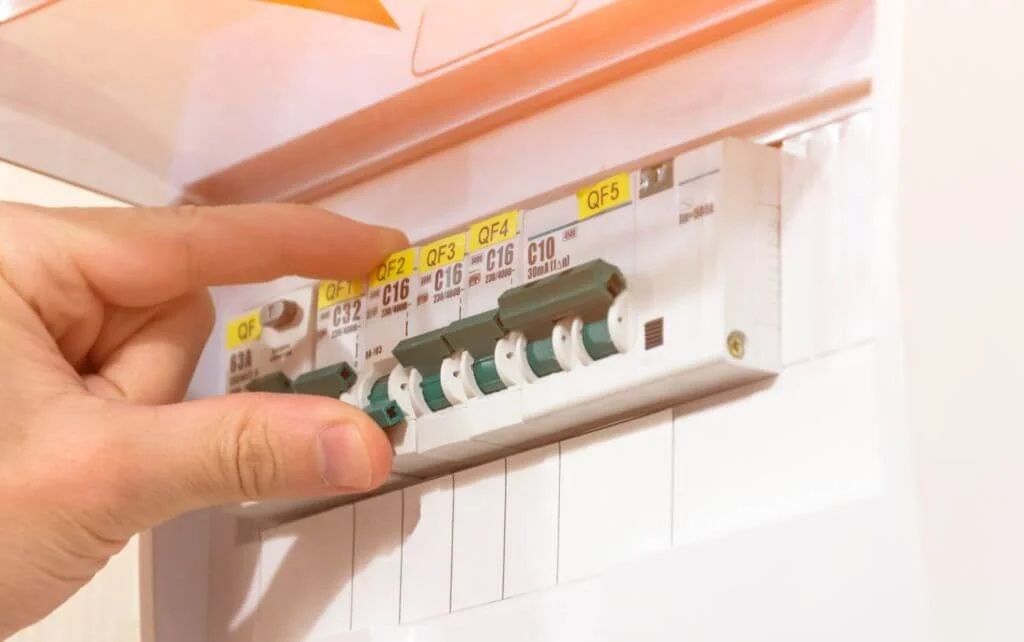
A circuit breaker is a safety device that automatically disconnects the electrical supply when it detects current flowing outside of safe limits. It sits inside your consumer unit (sometimes still called a fuse board) and protects the wiring, sockets, and appliances on that circuit from damage caused by excess current or a fault.
Modern UK properties typically use three types of protective device, each governed by BS 7671, the IET Wiring Regulations:
1)MCB (Miniature Circuit Breaker): protects against overloads and short circuits by monitoring current levels on a single circuit.
2)RCD (Residual Current Device): monitors the balance of current flowing out and back through a circuit and disconnects the supply if it detects current leaking to earth, protecting people from electric shock.
3)RCBO (Residual Current Breaker with Overcurrent Protection): combines both functions in a single device, giving overload, short circuit, and earth fault protection on one circuit.
Every trip is the device responding to a specific electrical condition. Understanding which type of device has tripped is the first step in identifying the cause, and it is exactly where our electricians start when diagnosing recurring faults.
Why Does My Circuit Breaker Keep Tripping?
A circuit breaker keeps tripping because something on that circuit is drawing too much current, causing current to leak to earth, or creating a direct short between live conductors. It is not a random fault. Every trip has a specific electrical cause, and repeated tripping means that cause is still present and still active.
The four main categories are:
- Overloaded circuit: too many appliances or too much electrical load drawing more current than the circuit can safely carry.
- Short circuit: a live and neutral conductor touching directly, causing a sudden surge of current.
- Earth fault: current escaping to earth through damaged insulation, water ingress, or a faulty appliance.
- Faulty circuit breaker: the device itself has degraded, aged, or been damaged and is no longer switching correctly.
Because each cause produces a slightly different pattern of tripping, an experienced electrician can often narrow down the likely fault before even opening the consumer unit, simply by asking when the trip happens, what was in use at the time, and whether it is the same device tripping each time.
The Most Common Causes of Circuit Breaker Trips
Across domestic and commercial properties throughout the North West, HD Electrics consistently identifies the same recurring causes of circuit breaker tripping:
a)Too many high-draw appliances running on one socket circuit
b)Damaged or ageing cable insulation inside walls or ceiling voids
c)Water ingress into outdoor sockets, lighting circuits, or damaged cable runs
d)Faulty appliances with damaged internal wiring or heating elements
e)Loose or corroded connections inside the consumer unit
f)Old or degraded circuit breakers that no longer trip within their rated tolerance
g)Incorrectly sized cabling for the load being carried
h)DIY electrical work that does not meet current wiring regulations
Identifying the actual cause requires proper fault finding rather than guesswork. Resetting the breaker without understanding why it tripped simply delays the next occurrence, and in some cases allows the underlying fault to worsen.
Overloaded Circuits Explained
An overloaded circuit occurs when the total current demand from appliances exceeds the rated capacity of the circuit and its protective device. When this happens, the MCB trips to prevent the cable from overheating.
Kitchens are a frequent source of overloads, particularly where a kettle, toaster, microwave, and washing machine share the same ring main. Electric heaters, hair dryers, and portable air conditioning units also draw significant current and are common culprits during colder or warmer months.
Signs of an overloaded circuit include:
a)The breaker trips consistently when multiple appliances run together
b)Warm sockets or faceplates
c)Dimming lights when a large appliance switches on
d)Buzzing or crackling sounds from sockets or the consumer unit
An overloaded circuit is a genuine fire risk if ignored, because sustained excess current heats the cable insulation over time. Redistributing appliance load, adding additional socket circuits, or upgrading circuit capacity are all solutions our engineers assess during a full electrical inspection.
Short Circuits and Why They Are Dangerous
A short circuit electrical fault happens when a live conductor makes direct contact with a neutral or earth conductor, bypassing the normal resistance of the circuit. This causes an almost instantaneous surge in current, and the breaker trips immediately, often the moment it is switched back on.
Short circuits are commonly caused by:
a)Damaged cable insulation from rodents, drilling, or wear over time
b)A faulty appliance with an internal wiring fault
c)Water entering an electrical enclosure or socket
d)Poor connections made during unqualified electrical work
A short circuit is one of the leading causes of electrical fires in UK properties, because the surge in current generates significant heat in a very short space of time. If your breaker trips the instant it is reset, with no appliances plugged in, this points strongly to a short circuit within the fixed wiring itself rather than an appliance fault, and it requires immediate professional fault finding.
Earth Faults and Electrical Safety
An earth fault occurs when current escapes the intended circuit path and flows to earth instead, usually through damaged insulation, moisture, or a faulty appliance. This is exactly what an RCD or RCBO is designed to detect, and it will disconnect the supply within milliseconds to prevent electric shock.
Common earth fault triggers include:
1)Water ingress into outdoor sockets, garden lighting, or damaged cable
2)A faulty appliance with a failed heating element or motor
3)Damaged flex on kettles, washing machines, or power tools
4)Deteriorating insulation on cables inside walls or lofts
RCD keeps tripping is one of the most searched electrical concerns we deal with, and it almost always indicates a genuine leakage of current somewhere on the protected circuits. Unlike an overload, an earth fault relates directly to electric shock protection, so it should always be treated as a safety priority rather than a temporary inconvenience.
Faulty Appliances That Cause Breakers to Trip
Can one faulty appliance trip the whole house? In properties with older consumer units, a single faulty appliance on an earth fault or shared circuit can absolutely cause other circuits, or the entire supply, to lose power. In modern installations with RCBOs fitted per circuit, a faulty appliance should only affect the specific circuit it is connected to.
Appliances most frequently responsible for tripping include:
-Washing machines and dishwashers with worn heating elements
-Kettles and toasters with damaged internal wiring
-Tumble dryers with failing thermostats
-Power tools and extension leads with damaged flex
-Older electric showers with degraded heating elements
Unplugging appliances one at a time and resetting the breaker after each removal is a useful first check, but a permanent solution requires testing the appliance and the circuit itself using proper insulation resistance and continuity testing, which forms part of our standard fault-finding process.
Problems With Consumer Units
Consumer unit problems are a frequent cause of unexplained or intermittent tripping, particularly in properties where the unit has not been upgraded in ten years or more. Consumer unit issues can include loose terminal connections, corroded busbars, degraded circuit breakers, and outdated components that no longer meet current safety standards.
Warning signs of a failing consumer unit include:
a)Visible scorch marks, discolouration, or a burning smell
b)Breakers that feel loose or do not click firmly into position
c)A mixture of old fuse wire, rewireable fuses, and modern MCBs
d)Frequent trips with no identifiable appliance or circuit cause
e)A unit made from combustible plastic rather than metal, which is no longer compliant with current regulations for many installation types
An ageing consumer unit that no longer meets modern safety standards puts the entire property at risk. A full inspection and, where necessary, a consumer unit upgrade is one of the most effective long-term investments a homeowner or landlord can make in electrical safety.
Wiring Faults Hidden Inside the Property
Wiring faults are often the hardest cause to identify because the damage is hidden behind walls, under floors, or inside ceiling voids. A circuit breaker that trips intermittently, without any consistent pattern, frequently points to a hidden wiring fault rather than an appliance or overload issue.
Common hidden wiring faults include:
1)Cable damage from nails, screws, or drilling during renovation work
2)Rodent damage to cable insulation in lofts or under floors
3)Deteriorated insulation on cables that have exceeded their expected service life
4)Incorrect cable sizing installed during previous electrical work
5)Poor connections at socket, switch, or junction box terminals
Locating a wiring fault requires systematic electrical troubleshooting using specialist test equipment, including insulation resistance testing, continuity testing, and circuit tracing. This is precisely the kind of fault finding our engineers carry out daily across domestic electrical services and commercial premises throughout the region.
Why Older Electrical Installations Trip More Often
Older electrical installations trip more frequently because cable insulation degrades over time, connections loosen through years of thermal expansion and contraction, and consumer units were often designed for a much lower electrical load than modern households now demand.
Properties wired more than 25 years ago frequently show:
1)Rubber or early PVC insulation that has become brittle and prone to cracking
2)Consumer units without RCD protection on socket circuits
3)Radial circuits and ring mains carrying far more load than originally intended
4)No earthing or bonding upgrades to match current regulations
An Electrical Installation Condition Report (EICR) is the recognised way to assess the safety of an older installation. It identifies deterioration, non-compliance with current regulations, and potential dangers before they cause a fire or serious fault. Landlords have a legal duty to provide a valid EICR, and homeowners with an older property benefit significantly from the same level of assessment.
When Resetting a Breaker Becomes Dangerous
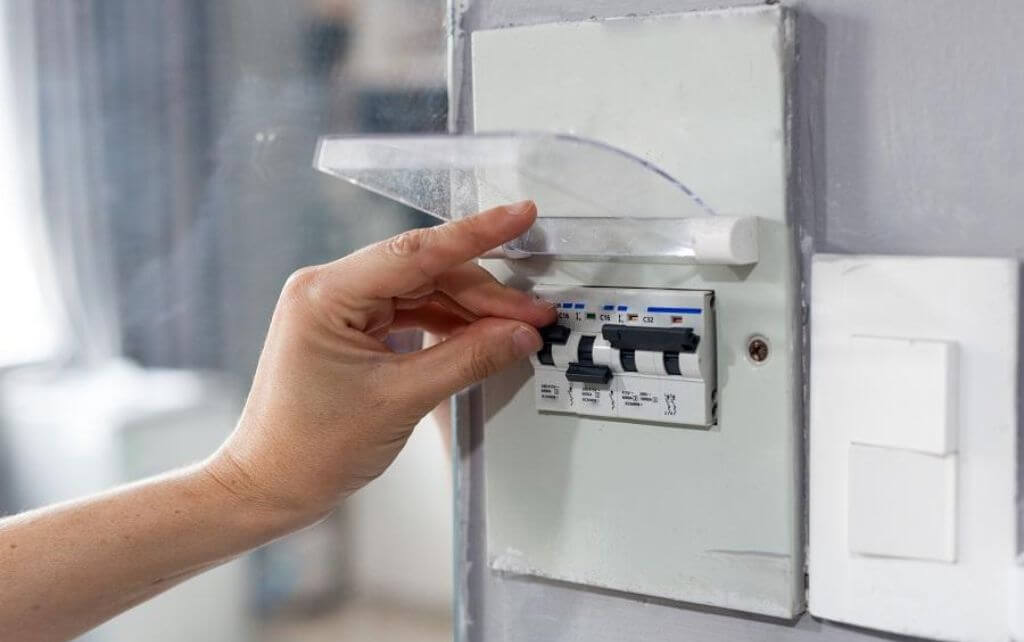
Resetting a tripped breaker once, after identifying an obvious cause such as an overloaded extension lead, is generally safe. Resetting the same breaker repeatedly, without understanding why it keeps tripping, is not. Each reset re-energises a circuit that has already shown a fault condition, and if that fault is a short circuit, an earth fault, or damaged wiring, repeated resetting increases the risk of overheating, arcing, and fire.
Stop resetting the breaker and call a qualified electrician immediately if:
a)The breaker trips again within seconds of being reset
b)You notice burning smells, scorch marks, or visible smoke
c)Sockets or switches feel warm, discoloured, or make crackling sounds
d)The trip happens with no appliances plugged in or switched on
e)The same breaker has tripped more than twice in a short period
Is a tripping breaker a fire risk? When the underlying cause is a short circuit, sustained overload, or deteriorating wiring, yes, it is a genuine fire risk, and continuing to reset the breaker without professional fault finding allows that risk to persist and potentially escalate.
What to Do Before Calling an Electrician
Before contacting a professional, a few simple checks can help identify an obvious cause and give the electrician useful information:
- Note which breaker has tripped and what circuit it controls (lighting, sockets, a specific appliance).
- Unplug all appliances on the affected circuit and reset the breaker.
- Reconnect appliances one at a time, waiting between each, to see if a specific device causes the trip.
- Check for obvious signs of moisture, particularly around outdoor sockets, garden lighting, or areas affected by leaks.
- Avoid resetting the breaker repeatedly if it trips immediately with nothing plugged in, or if you smell burning.
These steps help distinguish a likely appliance fault from a wiring or consumer unit issue, but they are not a substitute for proper diagnostic testing. If the breaker will not stay reset, or the cause is not obvious, it is time to arrange a professional inspection.
How Professional Fault Finding Works
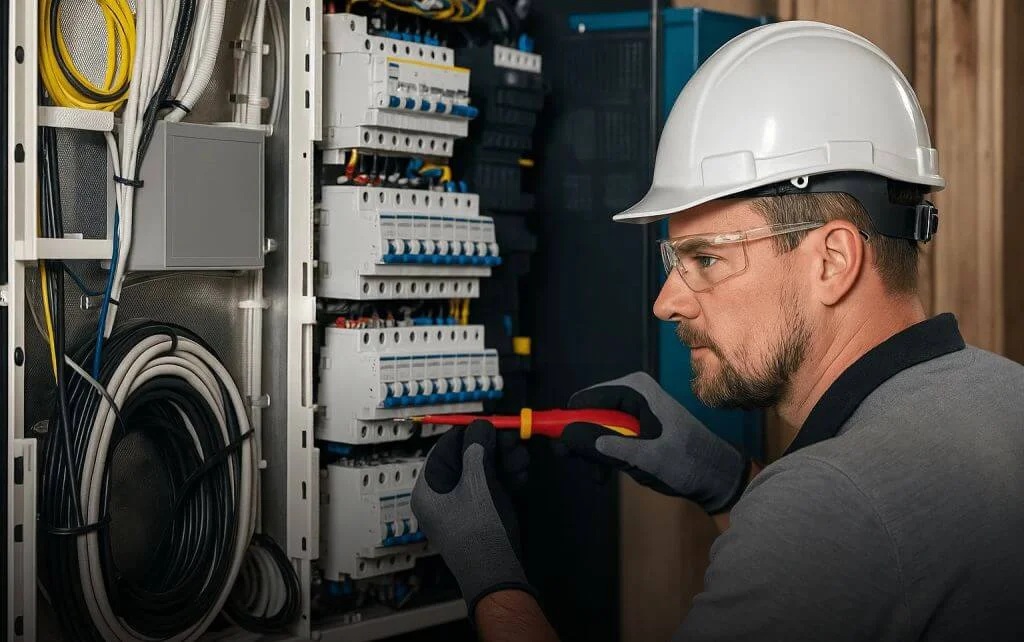
Professional electrical fault finding follows a structured, methodical process designed to identify the precise cause of a fault quickly and safely, rather than replacing components on a trial-and-error basis.
Our approach typically includes:
1)Visual inspection of the consumer unit, wiring accessories, and visible cable runs
2)Insulation resistance testing to detect damaged or degraded cable insulation
3)Continuity testing to confirm the integrity of circuit conductors and earthing
4)Polarity and earth loop impedance testing to verify circuits are wired and protected correctly
5)Load assessment to check whether circuits are being asked to carry more current than they were designed for
6)Isolating individual circuits to pinpoint exactly which section of the installation is at fault
This process allows our engineers to identify the specific cause, whether that is an overload, short circuit, earth fault, faulty appliance, or ageing consumer unit, and carry out a compliant repair the first time. Businesses in particular benefit from working with commercial electrical contractors who understand how to minimise disruption while restoring power safely and in line with BS 7671.
Preventing Future Circuit Breaker Problems
Preventative electrical maintenance is the most cost-effective way to avoid recurring circuit breaker trips, unplanned downtime, and emergency repair costs. Rather than waiting for a fault to develop, scheduled inspections identify weaknesses before they cause a trip, a failure, or a fire.
Effective preventative measures include:
1)Periodic EICR inspections in line with recommended intervals for your property type
2)Consumer unit upgrades where units are outdated, overloaded, or non-compliant
3)Rebalancing circuit loads across sockets, lighting, and appliance circuits
4)Testing RCD and RCBO devices to confirm they trip within correct time and current limits
5)Addressing minor faults, such as loose connections, before they worsen
6)Reviewing electrical load requirements when adding new appliances, equipment, or renovations
Seasonal changes also play a role. Moisture ingress during wet weather is a common cause of earth faults, particularly on outdoor circuits, garden lighting, and older cable runs, so a breaker that only trips when it rains is very likely reacting to water finding its way into damaged cable or a poorly sealed enclosure.
Businesses that rely on continuous power, from retail premises to offices and industrial units, benefit significantly from a planned maintenance schedule delivered by experienced commercial electrical contractors, reducing the risk of unexpected downtime and protecting both equipment and occupants.
Frequently Asked Questions
- Why does my circuit breaker keep tripping immediately?
A breaker that trips the instant it is reset, with nothing plugged in, almost always indicates a short circuit or earth fault within the fixed wiring or the breaker itself, rather than an appliance issue. This requires professional fault finding rather than repeated resetting. - Is it safe to keep resetting a circuit breaker?
Resetting once after identifying an obvious cause is generally fine. Resetting the same breaker repeatedly without knowing why it trips is not safe, as it re-energises a circuit with an active fault and increases the risk of overheating or fire. - Can one faulty appliance trip the whole house?
In older properties without RCBOs on individual circuits, yes, a faulty appliance causing an earth fault can trip a shared RCD covering multiple circuits. In modern consumer units with RCBOs fitted per circuit, only the affected circuit should be interrupted. - How do I know if I have an overloaded circuit?
Signs include the breaker tripping when several appliances run together, warm sockets or faceplates, lights dimming when large appliances switch on, and buzzing sounds from sockets or the consumer unit. - Can bad wiring cause repeated breaker trips?
Yes. Damaged insulation, loose connections, rodent damage, and incorrectly sized cabling are all common wiring faults that cause intermittent or repeated tripping, and they require professional testing to locate accurately. - Should I replace a circuit breaker myself?
No. Consumer unit work involves live electrical components and must comply with BS 7671. Replacing or working on a circuit breaker without the correct qualifications is dangerous and should always be carried out by a qualified electrician. - How much does electrical fault finding cost?
Costs vary depending on the complexity of the fault, the size of the installation, and how long diagnostic testing takes. HD Electrics provides a clear assessment and transparent pricing before any repair work begins. - When should I call an electrician?
Call immediately if a breaker trips repeatedly, trips instantly with no load connected, if you notice burning smells or scorch marks, or if sockets and switches feel warm or make unusual sounds. - Can a faulty consumer unit cause tripping?
Yes. Loose terminal connections, corroded busbars, and degraded or ageing breakers within the consumer unit itself are a common and often overlooked cause of unexplained tripping. - Does an RCD trip for different reasons than an MCB?
Yes. An MCB trips due to overload or short circuit current on a single circuit. An RCD trips when it detects current leaking to earth, which relates directly to protection against electric shock rather than overload. - Why does my breaker trip only when it rains?
This pattern strongly suggests water ingress into an outdoor socket, garden lighting circuit, or damaged cable, causing an earth fault that only occurs when moisture reaches exposed or damaged wiring. - Can an extension lead overload a circuit?
Yes. Extension leads, particularly when daisy-chained or used to power multiple high-draw appliances, can easily exceed the safe current rating of the circuit and cause the breaker to trip. - How often should electrical systems be inspected?
Domestic properties are generally recommended to have an EICR carried out at set intervals depending on occupancy type, with landlords required to obtain one by law. Commercial premises often require more frequent inspection depending on usage and risk level. - Can circuit breakers wear out?
Yes. Mechanical components inside a breaker degrade with age and repeated switching, which can cause it to trip prematurely, fail to trip when it should, or no longer make a reliable connection. - Is a tripping breaker a fire risk?
When the underlying cause is an overload, short circuit, or deteriorating wiring, yes. Sustained excess current or arcing generates heat that can ignite surrounding materials, which is why repeated tripping should always be investigated rather than repeatedly reset.
Conclusion
A circuit breaker that keeps tripping is never just an inconvenience. It is a clear signal that something on your electrical system, whether an overloaded circuit, a short circuit, an earth fault, a faulty appliance, or a deteriorating consumer unit, needs proper investigation. Repeated trips are warning signs, not faults to work around, and ignoring them allows the underlying problem to develop into a genuine safety hazard.
HD Electrics provides expert electrical fault finding, safe and compliant repairs, consumer unit upgrades, and thorough electrical safety inspections across homes and businesses throughout the North West. Our NICEIC-qualified engineers identify the true cause of recurring breaker trips quickly, carry out lasting repairs in line with BS 7671, and help homeowners, landlords, and businesses protect their properties through proactive preventative maintenance.
If your circuit breaker keeps tripping, do not keep resetting it and hoping the problem resolves itself. Contact HD Electrics today at https://hd-electrics.com/ to arrange professional fault finding and put the problem right, safely and permanently.